Impressions from the week
From running a coupled Earth system model to exploring its results.
Running a coupled Earth system model yourself is a different experience from learning about one. At the first natESM Summer School, 23 participants at different stages of their scientific careers – from Master’s students to PhD researchers and postdocs – had the opportunity to do exactly that. From 13 to 19 September 2026 in Kiel, they worked with ICON, a core component of the natESM system, on DKRZ’s Levante supercomputer: compiling the model, setting up and running their own experiments, and finally analyzing the resulting model output in seven scientific projects.
The participants came from universities and research institutions across Germany, bringing together different disciplinary backgrounds and levels of experience. Scientific lectures, technical training, and project work were closely interwoven throughout the week: while lectures provided perspectives on the atmosphere, ocean and land, and their interactions, the participants were simultaneously working with a coupled Earth system model themselves.
Working with ICON on Levante
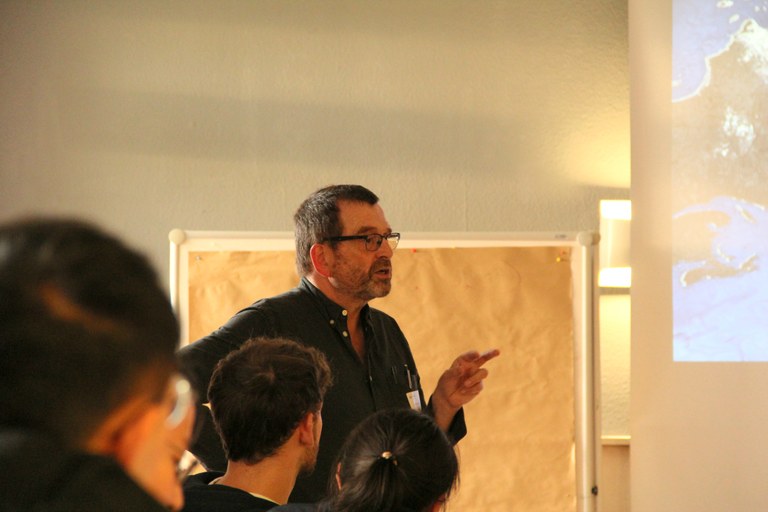
The practical work started on DKRZ’s Levante supercomputer. Supported by the natESM Research Software Engineers (RSEs), participants learned how to access the system, compile and run ICON, and set up an individual test experiment.
For the Summer School, we had prepared a dedicated coupled ICON-XPP configuration combining atmosphere, ocean, and land. The participants worked with a long pre-industrial control simulation as their reference, and with experiments in which atmospheric CO₂ concentrations were abruptly increased to four times their pre-industrial value. The experiments, each covering around 30 years and starting from different points of the control simulation, provided the model output for the projects.
Following a short joint brainstorming session, the participants developed seven broad scientific themes according to their interests and formed project groups, each developing its own questions, hypotheses, and approach to analysing the simulations.
The seven projects covered atmospheric rivers; ocean circulation and the Atlantic Meridional Overturning Circulation (AMOC); climate variability including the El Niño–Southern Oscillation (ENSO) and the Walker circulation; climate extremes; Arctic climate change and sea ice; land–atmosphere interactions; and terrestrial carbon processes. Scientists with expertise in the respective fields accompanied the groups, discussing research questions and hypotheses, helping to identify suitable variables and diagnostics, and supporting the interpretation of the results.
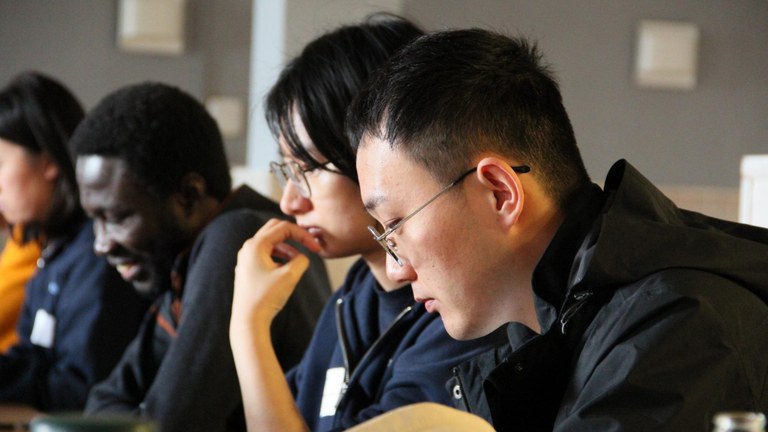
The groups selected the model variables and diagnostics needed for their analyses, handled and visualised the simulation output, compared the 4×CO₂ experiments with the control simulation, and critically assessed their findings. Prepared analysis workflows helped them get started with the large model datasets, while an introduction to ESMValTool demonstrated how established evaluation and diagnostic tools can support systematic model analysis.
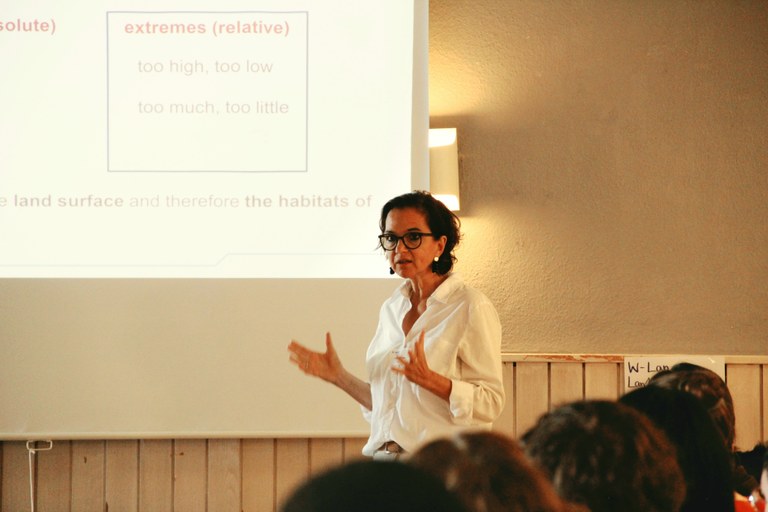
The scientific programme accompanied this project work throughout the week, including a keynote by Sabine Attinger (UFZ) on the transition from climate modelling to climate impact modelling.
Beyond the model runs
A Tuesday evening Tech Corner complemented the scientific programme with short introductions to tools and infrastructure relevant to Earth system modelling and natESM: Git for version control, mkexp for experiment configuration, and YAC and ComIn as important Infrastructure components of the natESM system. The four compact sessions provided a glimpse into the technical ecosystem surrounding the model runs – from managing code and experiments to coupling model components and extending ICON through its plugin interface.
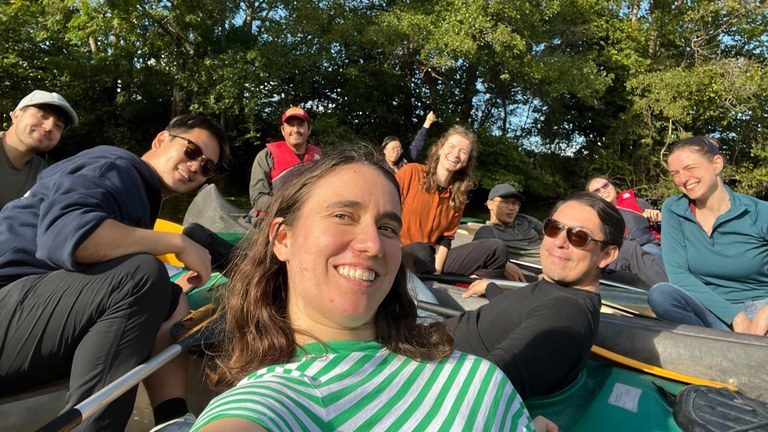
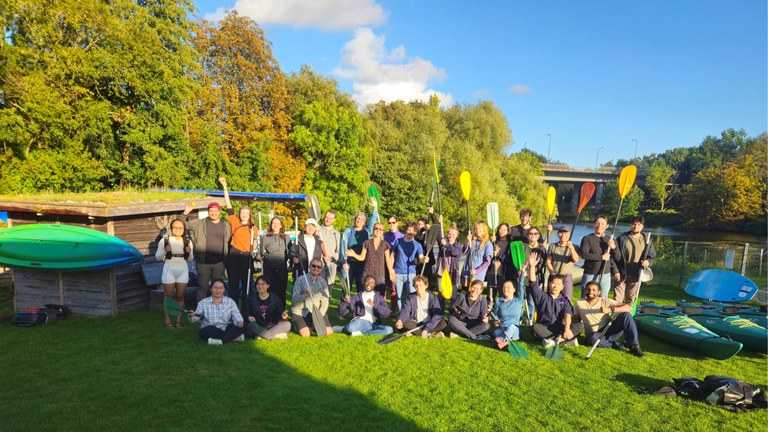
Scientific exchange continued well beyond the scheduled sessions – over lunch, dinner and coffee breaks and, particularly as Friday’s presentations approached, well into Thursday evening. A canoe trip, a career evening with scientists and RSEs, a movie night, and evenings of music and dancing provided additional opportunities for informal exchange.
What can we learn from 30 years?
On Friday, all seven groups presented their projects and discussed their findings with the other participants and scientists. The presentations reflected the breadth of questions that had emerged from the same set of coupled simulations – but also the care needed when interpreting the results.
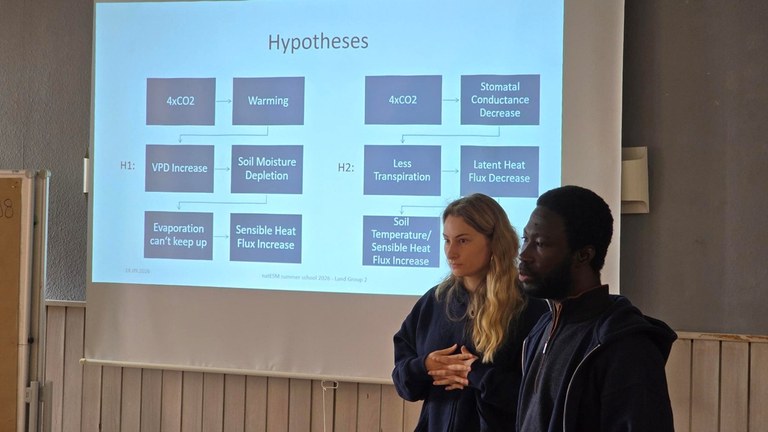
The 30-year experiments allowed the groups to explore how different parts of the coupled Earth system responded to a strong change in forcing – and at the same time provided a practical lesson in interpreting climate simulations. Internal variability remains important over such timescales, while different components of the Earth system adjust at very different rates. The analyses were therefore exploratory rather than intended as statistically robust climate projections. Distinguishing an interesting signal from a conclusion that the available simulations could actually support became an important part of the scientific work.
The configuration itself illustrated another fundamental aspect of Earth system modelling. Coupling atmosphere, ocean, and land already requires substantial computational resources, and choices inevitably have to be made about which processes and components can be included. Developing and running an Earth system model is an enormous scientific and technical undertaking. Model complexity, scientific ambition, computing time, and available resources continually have to be balanced against one another.
The Summer School was a learning experience for natESM as well. The scientists developing ICON-XPP at MPI-M and the natESM RSEs had prepared the configuration specifically for the school. Seeing 23 researchers with different scientific backgrounds work with it provided valuable insights into where workflows, documentation and technical components already worked well and where further development is needed. These experiences will feed directly into natESM’s work towards its first community-supported Earth system model configuration, which we aim to provide to the community in spring 2027.
Thank you
We would like to thank all participants for their engagement, curiosity, and the many discussions throughout the week.
Special thanks go to our scientific mentors Vera Schemann (University of Cologne), Birgit Hassler (DLR), Kerstin Hartung (DLR), Julia Nabel (MPI-BGC), Tobias Stacke (MPI-M), Johann Jungclaus (MPI-M), Wolfgang Müller (MPI-M), Stephan Lorenz (MPI-M), and Nils Brüggemann (ZMT), who accompanied the project groups, discussed scientific questions and hypotheses, and supported the interpretation of the results.
We also thank our RSE mentors Wilton Jaciel Loch (DKRZ), Julia Duras (DKRZ), Aleksandar Mitic (DKRZ), Christian Tica (DKRZ), and Vladyslav Pushenko (JSC), who prepared the technical environment and supported the participants in working with ICON and running their experiments on Levante.
Finally, we thank all lecturers and contributors to the scientific and technical programme, and the institutions whose support helped make the first natESM Summer School possible.
With support from
 |
 |
 |
 |
 |